
Pick to Pack Process




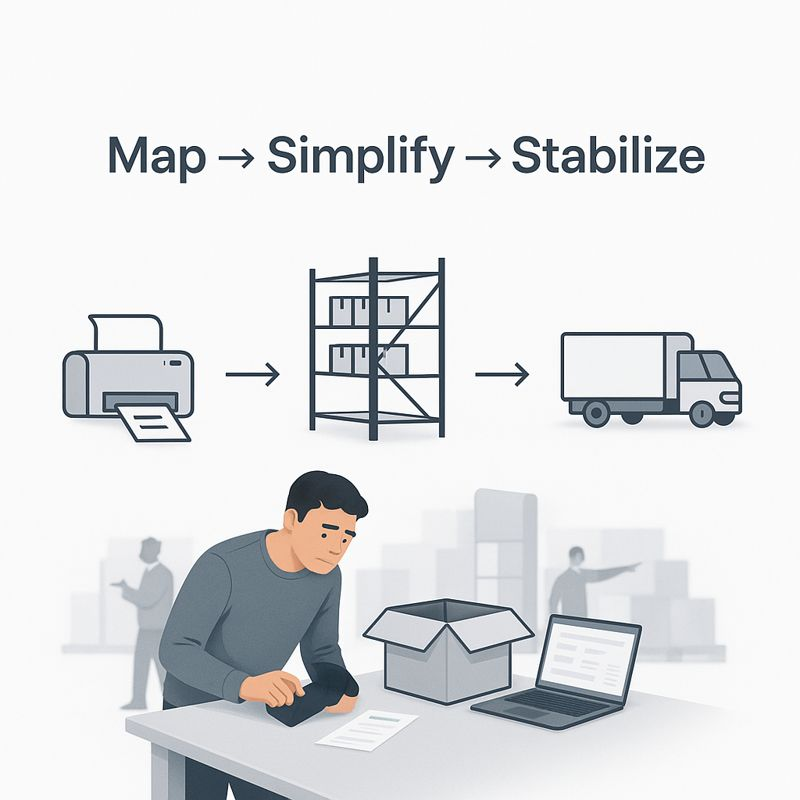
Closing the gap between what was promised and what actually ships
Written By: David Carneal – Digital Efficiency Consulting Group (DECG)
A lot of pick-to-pack chaos isn’t caused by the floor or the office — it’s caused by the gap between them. Sales promises one thing, scheduling updates another, and the floor sees a ticket that may or may not tell the full story. That disconnect is where rushes, rework, and frustrated customers are born.
Make key information visible on the ticket
Your team shouldn’t need to dig through email to figure out what really matters on an order. If there’s a hard customer due date, a critical configuration detail, or a “do not substitute” rule, it needs to be front and center on the ticket or handheld screen. The floor should be able to trust what they see.
Create a simple path for exceptions
We’re not going to stop exceptions from happening — customers change their minds, parts go on backorder. What we can do is make the path for handling them clear. Who on the office side owns decisions when something doesn’t match the plan? How does that decision get back onto the ticket so no one has to guess?
Talk about the same problems, with the same data
A short, regular meeting between office and floor leaders — 20–30 minutes, once a week — can do more for your process than another piece of software. Look at the same simple metrics together: late orders, rework, expedites, and where tickets got stuck. Then choose one small fix you’ll try before the next meeting. Over time, that rhythm does more for trust and performance than any memo ever will.
When office and floor are aligned, the pick ticket becomes a shared tool instead of a source of arguments — and your customers feel the difference.