
Data Farm




Written by: David Carneal – Digital Efficiency Consulting Group – DECG
Read Time: 4 min
Data integrity isn’t philosophical. It’s not a vibe. It’s whether you can reproduce the same number tomorrow without reenacting a crime scene investigation.
In the real world, the question shows up like this: “Why does the KPI say 92% here and 87% there?” KPI means Key Performance Indicator, but on bad days it stands for Keep People Investigating.
If your explanation starts with “Well, it depends,” you’ve found the crack in the chain.
The definition that matters
In business terms, integrity means the number is explainable and reproducible. It doesn’t require perfection. It requires traceability.
Explainable means you can describe what’s included and excluded. Reproducible means you can rerun it and get the same result. Auditable means you can trace it back to the original records.
When integrity is strong, the conversation moves from “Is this number real?” to “What do we do about it?” That’s the whole point.
- Integrity, translated:
- Explainable: you can describe inclusions, exclusions, and filters.
- Reproducible: you can rerun it tomorrow and get the same result.
- Auditable: you can trace it back to source records (the receipts).
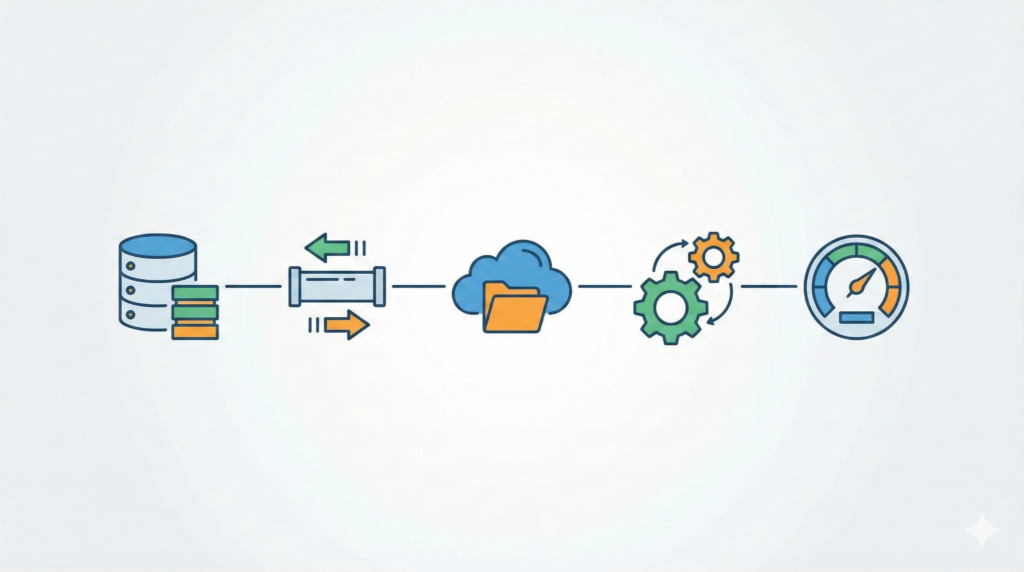
The integrity chain (five links)
Most organizations have the same five links. Most organizations also break one or two of them and then act surprised when the number starts misbehaving.
You don’t have to fix every link at once. But you do need to know which link is currently held together with duct tape and optimism.
- Source systems: ERP (Enterprise Resource Planning), CRM (Customer Relationship Management), WMS (Warehouse Management System), service, finance.
- Ingestion: how data lands (APIs, file drops, replication).
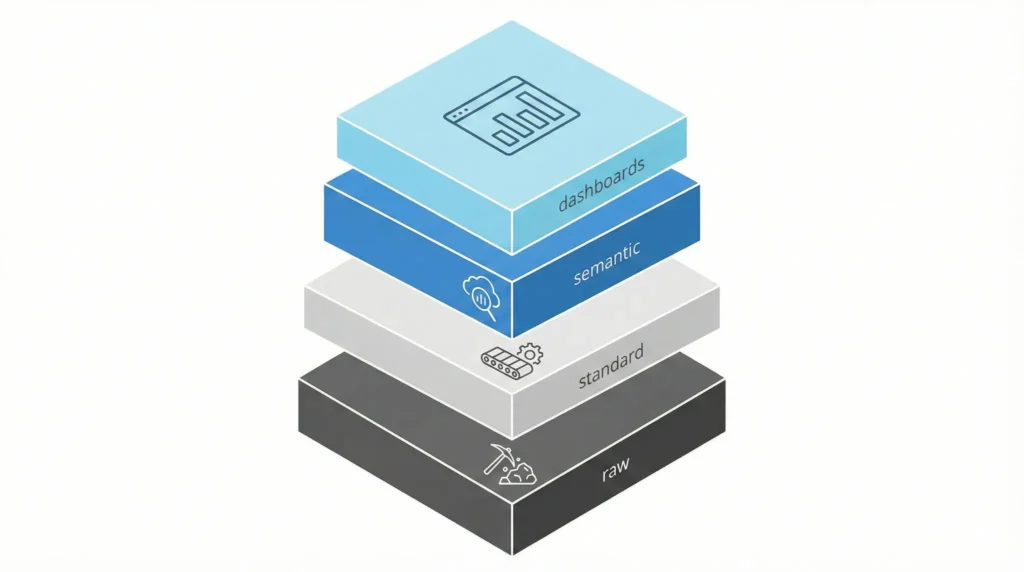
- Storage: raw preservation plus curated structures.
- Transformation: standardizing and calculating (with version control).
- Consumption: dashboards, reports, exports, ad-hoc analysis.
A quick example: the “on-time shipment” trap
Ops defines on-time as “left the dock by the promised date.” Customer service defines on-time as “arrived at customer by the promised date.” Finance defines on-time as “invoice issued within X days of ship date.”
All three are valid metrics. None of them are the same KPI. If you label them all “On-Time %,” your dashboard is basically asking for conflict.
Integrity includes naming discipline: one definition, one label, one certified calculation.
- Make this measurable:
- Write the definition in one paragraph.
- List the timestamps used (order date, ship date, delivery date).
- Define the clock (business days vs calendar days).
- Define exclusions (backorders, customer holds, carrier delays).
Where integrity breaks in real life
Integrity usually breaks where humans do “helpful” things. Manual edits. Silent filter changes. Spreadsheet logic that only one person understands. BI models that get updated without review.
The fix is to reduce mystery: lock down raw data, standardize identifiers, and certify the layer your dashboards pull from.
- Common breakpoints:
- File drops overwriting yesterday’s data with no log.
- Transformations changed without review (silent KPI rewrites).
- Dashboards connected directly to source systems.
- No standardized identifiers (customers, SKUs, locations).
- No owner for definitions (the KPI belongs to everyone and therefore to no one).
Small step: define one KPI like an adult
Pick one KPI and write a definition that a new hire could follow. Then assign an owner. Then record the logic in a governed place (not a personal spreadsheet).
This isn’t bureaucracy. It’s how you stop paying the tax of re-explaining the same number forever.
- Define-one-KPI worksheet:
- Name: what is the KPI called (exact label)?
- Purpose: what decision does it support?
- Formula: what’s the calculation (plain English first)?
- Sources: which systems provide inputs?
- Timing: what period and cut-off rules apply?
- Owner: who approves definition changes?
CTA: Run the define-one-KPI worksheet for your most controversial KPI. The goal is a definition that doesn’t change quietly and a lineage you can explain in one minute.
Leave a Reply