
Data Farm



Written by: David Carneal – Digital Efficiency Consulting Group – DECG
Read Time: 4 min
Every few years the industry invents a new animal and asks you to adopt it. Lake. Warehouse. Lakehouse. Mesh. Fabric. Probably “data terrarium” is next.
The name matters less than the rules you enforce. So let’s compare these patterns in plain English, then talk about why a “data farm” approach keeps you out of the swamp.
If you’re trying to choose a direction, you’re not shopping for a buzzword. You’re shopping for less rework, fewer dashboard arguments, and faster decisions.
Data lake
A data lake is big, flexible storage for raw and semi-structured data. It’s great for capturing data quickly and cheaply, especially when your inputs vary a lot.
It fails when there are no fences. Without governance, it becomes a swamp: everything is there, nobody knows what’s trustworthy, and the only way to find anything is tribal knowledge.
Lakes work best when you treat them like a raw landing zone plus clearly labeled curated zones, not as a single magical bucket.
- Great when: You need to land data fast and preserve raw history.
- Risk when: There’s no standardization, ownership, or certified outputs.
Data warehouse
A warehouse is curated, structured, and analytics-first. You define the model. You enforce schema. You create a consistent place for reporting truth.
It fails when the modeling effort becomes a bottleneck, or when teams create shadow warehouses in spreadsheets to move faster.
Warehouses shine when you keep a tight semantic layer and publish certified datasets that dashboards reuse.
- Great when: You want consistent executive reporting and strong governance.
- Risk when: Delivery is slow and teams bypass it for speed.
Lakehouse
A lakehouse tries to blend lake flexibility with warehouse structure. In the best case, it gives you one platform to manage raw, transformed, and curated data with shared controls.
In the worst case, it’s a costume party with invoices: you still need governance, but now it’s distributed across more tools and opinions.
If you adopt a lakehouse, you still need zoning rules. Otherwise you’ll rebuild the zones later, with higher stakes and more politics.
- Great when: You can enforce zones and certified datasets within the platform.
- Risk when: Everything goes in one place with no clear layering rules.
Data farm (a pattern, not a product)
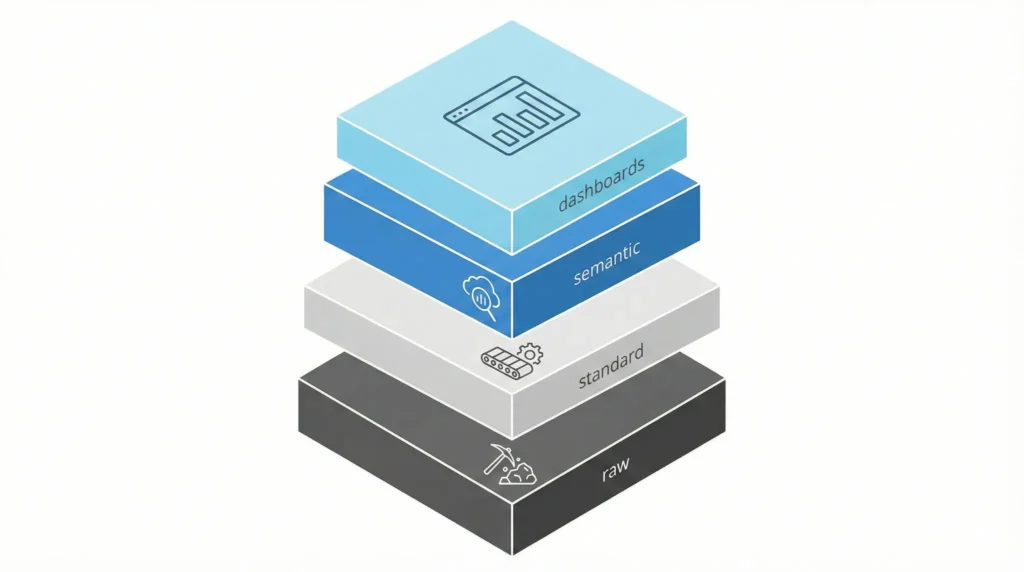
A data farm is a practical pattern: raw data is preserved, standardized data is consistent, meaning is governed, and dashboards consume certified outputs.
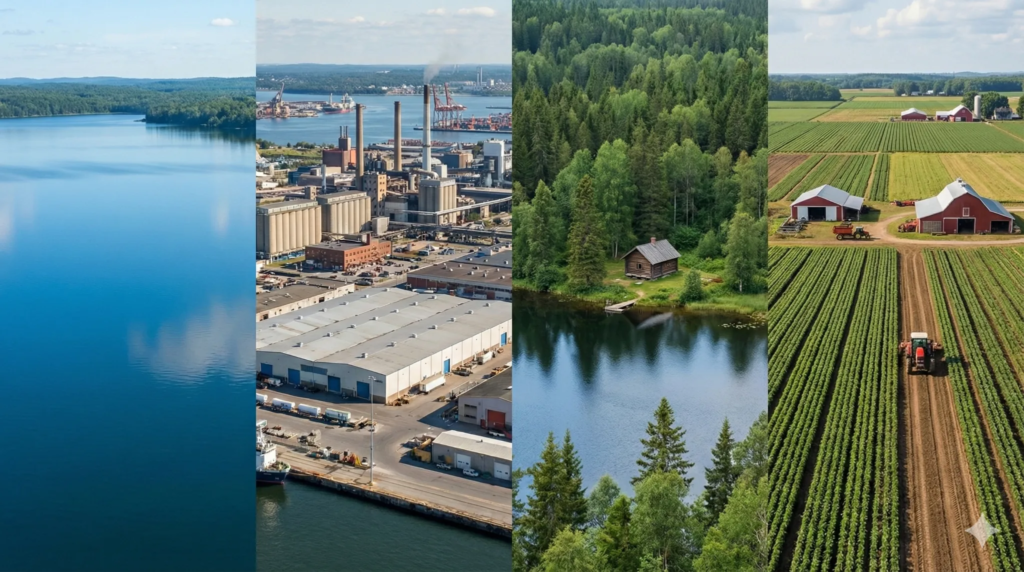
It works with lakes, warehouses, lakehouses, or a mix. The farm idea is the zoning laws: raw field, packing house, semantic layer, farmers market.
When you talk about a data farm, you’re really talking about governance that’s visible in the architecture, not hidden in a policy PDF.
- The win:
- You can answer “where did the number come from?” quickly.
- You reduce dashboard drama by separating raw from meaning.
- You keep self-service analytics, but label what’s certified.
A simple decision guide
If you’re choosing a platform or redesigning your current setup, don’t start with the animal name. Start with your constraints and the failure modes you’re living with today.
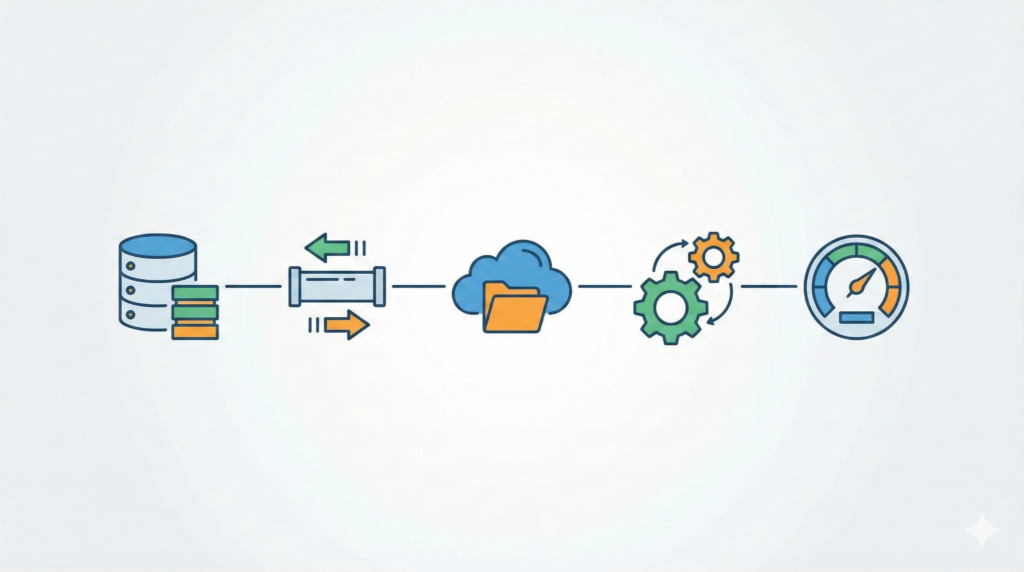
Then choose the minimum set of capabilities you need: raw preservation, standardization, semantic certification, and governed dashboard consumption.
- Decision guide (quick):
- Need fast landing of raw data and high variety inputs? Build a raw zone (often lake-like).
- Need consistent executive reporting? Build a governed semantic layer (warehouse-like behavior).
- Need both? Use layered zones and certify outputs regardless of platform.
- If governance is missing today, prioritize fences and ownership before buying new animals.
- If delivery is too slow today, prioritize reusable certified datasets and reduce one-off dashboard logic.
Small step: label your zones
Before you buy anything, write down what you have today and label it. If you can’t label it, you can’t govern it.
- Zone labels to use:
- Raw: preserved, append-only, write-protected for humans.
- Standardized: normalized identifiers, statuses, and time rules.
- Semantic: documented KPIs and certified datasets.
- Dashboards: consumption only, no hidden business logic.
CTA: Write down your current “zones” (raw, standardized, semantic, dashboards). If you can’t label them, you don’t have zones, you have a pile. Start with zoning before shopping.
Leave a Reply