
Data Farm




Written by: David Carneal – Digital Efficiency Consulting Group – DECG
Read Time: 3 min
If your KPI shows up as three different numbers in the same meeting, congratulations: you don’t have a KPI, you have a choose-your-own-adventure.
This is how “reporting” quietly turns into courtroom drama. Sales brings Exhibit A. Ops brings Exhibit B. Finance brings Exhibit C. Everyone is technically correct in their own universe, and nobody is correct in the universe where decisions get made.
How KPI arguments are born
KPI arguments rarely start with bad intentions. They start with speed. Someone needs a number now, so they export it. Someone else needs the number in a different view, so they export it again. A third person “fixes” a few rows because the CEO is waiting. And suddenly you’re running a data relay race where every handoff drops the baton.
The real cost isn’t the wrong number. It’s the time you spend defending the number instead of improving the thing the number is supposed to measure.
- Different systems for the same concept (orders in ERP, shipments in WMS, revenue in finance).
- Different timing (yesterday vs last closed period vs “right now-ish”).
- Different filters and definitions (what counts as “on-time,” “complete,” or “won”).
- Different calculation logic hidden inside spreadsheets or BI files.
The moment trust breaks
Once people see conflicting dashboards, they don’t just distrust the number. They distrust the process. Then the organization defaults to “who do I believe?” instead of “what does the data say?”
That’s when reporting turns into politics, and the loudest voice becomes the BI tool.
- Watch for these signals:
- Dashboards are used as screenshots, not as living tools.
- Teams maintain “their version” of the KPI in parallel.
- Every meeting starts with reconciliation before discussion.
- People ask for exports because they don’t trust the dashboards.
A small, practical fix: make one KPI traceable
You don’t fix this by buying a shiny platform. You fix it by making the KPI explainable and reproducible.
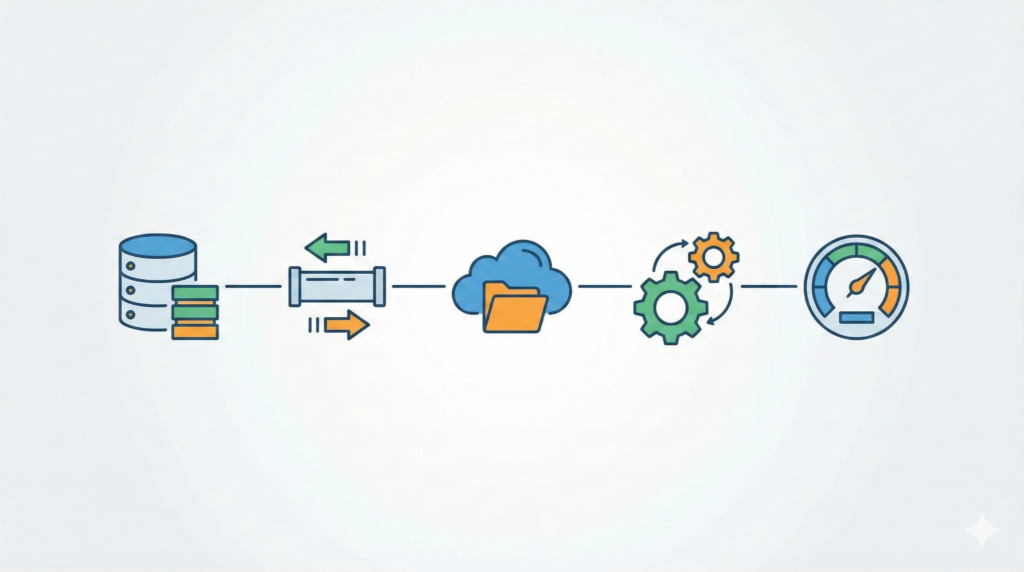
Start with one KPI that causes recurring arguments. Then build a simple trace from source to dashboard. The goal is boring clarity.
- Quick self-audit (15 minutes):
- Write the KPI definition in one paragraph (no math yet).
- List the source systems that feed it (ERP, WMS, CRM, finance).
- Identify where it is transformed (spreadsheet, SQL, BI model).
- Name the owner (one human, not a committee).
- Decide what “official” looks like (certified dataset + endorsed dashboard).
The “Data Farm” mindset
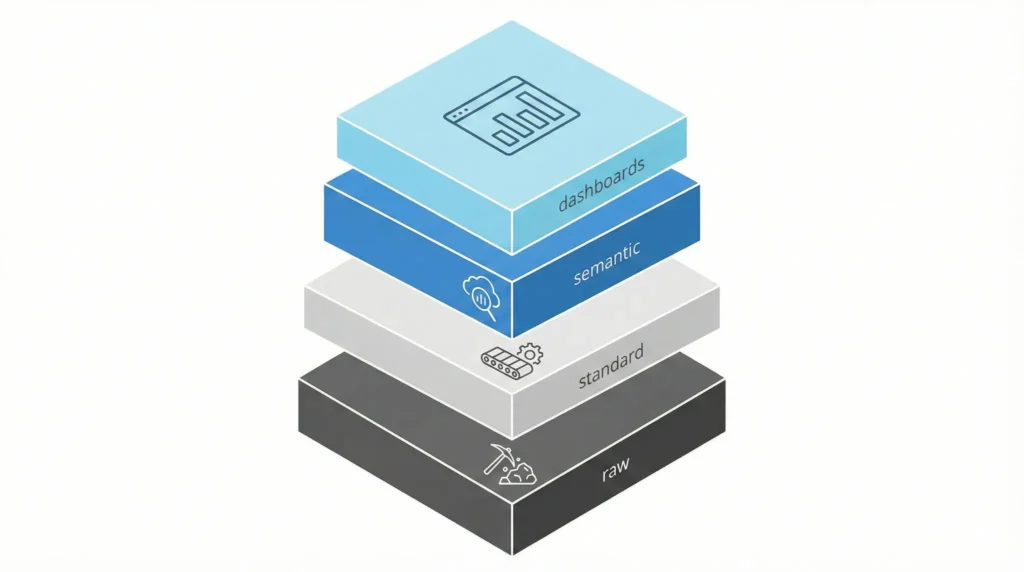
A data farm is a pattern: raw data is preserved, standardized data is consistent, meaning is governed, and dashboards consume certified outputs. The farm has fences because fences prevent chaos from becoming a lifestyle.
When you adopt this pattern, KPI arguments fade because the lineage is visible. It becomes normal to answer “where did that come from?” without summoning final_v9_REALfinal.xlsx.
CTA: Pick one KPI that causes arguments and run the quick self-audit above. If you can’t answer “where did this number come from?” in one minute, that’s your first improvement target.
Leave a Reply