
Making Digital Efficiency Work for You





Written by: David Carneal – Digital Efficiency Consulting Group – DECG
Read Time: 3 min
Digital efficiency isn’t a shopping trip for shiny software. It’s the habit of making work easier, cleaner, and less wasteful by improving the way tasks flow through your day. Tools can help, but they’re not the starting line. The starting line is people who feel allowed to ask better questions and try small improvements without getting swatted down for “rocking the boat.”
If your current approach to “efficiency” is a spreadsheet of complaints nobody reads, congratulations: you have the raw material, not the process. Digital efficiency is what happens when you turn that raw material into experiments, measurements, and repeatable habits.
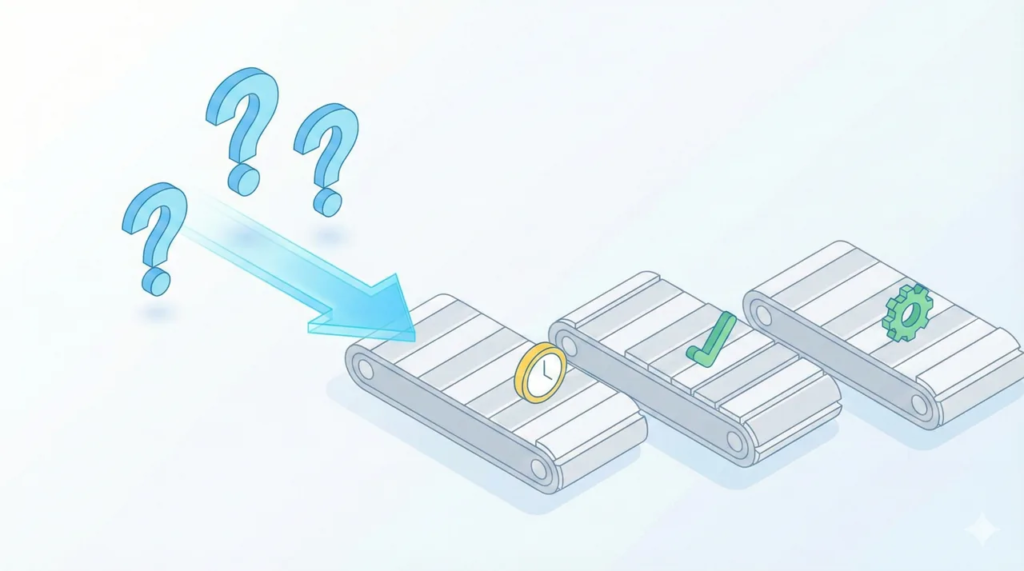
Three Questions That Start Everything
Most improvements begin with one of these. They’re simple. They’re also wildly disruptive to stale workflows.
- “Why do we do it this way?”
- “What if we tried something different?”
- “Is there an easier way to do this?”
If those questions feel uncomfortable, that’s a clue you’ve found a process running on autopilot. Autopilot is great for airplanes. It’s less great for invoice approvals, customer follow-ups, and the endless parade of “quick updates” that somehow eat half the day.
What Creativity Looks Like at Work
Creativity in operations isn’t a beanbag chair and a brainstorming playlist. It’s practical problem-solving. It sounds like:
- “Can we collect this information once and reuse it?”
- “Can the system tell us status instead of people?”
- “Can we reduce approvals for low-risk items?”
- “Can we standardize the intake so the work stops bouncing back?”
One example: a team retypes order details into an ERP, a shipping system, and a spreadsheet “just in case.” That’s not redundancy. That’s a recurring error generator. Creativity is the moment someone says, “What if we make one source of truth and stop feeding three hungry duplicate monsters?”
Turn Complaints Into Experiments
When someone says, “This is stupid,” translate it into: “This step creates friction.” Then run an experiment small enough to fail safely. Small experiments beat big debates.
- Pick one repeating task that happens daily or weekly.
- Write down the current steps in plain language (no flowchart Olympics required).
- Circle the step that feels the most pointless, repetitive, or error-prone.
- Test one change for one week.
- Measure what improved (time, errors, handoffs, customer impact, and yes, sanity).
Micro-Experiment Scorecard
To keep experiments from turning into “we tried it once and forgot,” track three things:
- Before
- How long it took, how many errors, how many handoffs.
- After
- Same metrics after the change.
- Decision
- Keep it, tweak it, or roll it back.
Quick Self-Audit
Use this checklist to spot where creativity will actually pay you back:
- We re-enter the same information in more than one place.
- We chase status updates because the system doesn’t tell us what’s happening.
- We approve low-risk items with the same rigor as high-risk ones.
- We have “tribal knowledge” steps that only one person knows how to do.
- We fix the same error more than once a week.
Start with one item. You don’t need a transformation plan. You need a first win you can point to and repeat.
CTA: Run a 20-minute “Why Sprint” this week: ask the three questions above about one process, capture every idea, then pick one tiny change to test for seven days.