
Pick to Pack Process




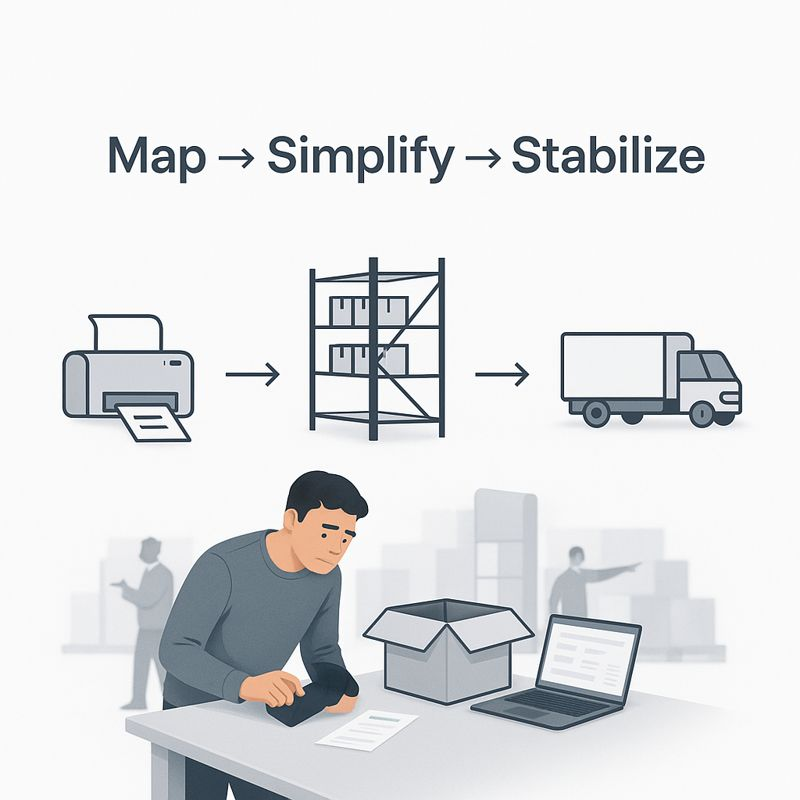
How to tighten accuracy without turning your best pickers into robots
Written By: David Carneal – Digital Efficiency Consulting Group (DECG)
One of the fastest ways to lose margin is to rush orders out the door with quiet picking mistakes baked in. A wrong item here, a missing component there — it doesn’t look like much on the floor, but it shows up later as returns, rework, and customers who stop trusting your lead times.
Design the work so accuracy is the default
Most people don’t wake up planning to make mistakes. Errors usually come from cramped labels, confusing locations, look-alike parts, or a rush to hit the next target. The fix isn’t to lecture your fastest pickers — it’s to design the work so the right choice is the easy choice.
- Group look-alike parts together with clearer labeling and separators.
- Use simple visuals on shelves for high-volume SKUs (shapes, icons, or color blocks — not just tiny text).
- Standardize how quantities are written on tickets or handhelds to avoid misreads.
Add light-touch checks where they matter most
You don’t need to inspect every nut and bolt. Focus checks where the risk and cost of error are high: key customers, custom configurations, or safety-critical components. A quick second set of eyes at staging or pack-out on those orders can prevent a lot of expensive fixes downstream.
Use data to coach, not blame
If you track errors by type and location, you’ll see patterns: a certain zone, a certain part family, or a certain shift. That’s gold. Sit down with the people in that area and ask what makes it easy to get it wrong. Often, a small change in layout, labeling, or ticket design removes most of the issue without slowing anyone down.
The goal isn’t zero human mistakes. The goal is a process that catches the big ones before they ship and makes it harder for the small ones to happen in the first place.